


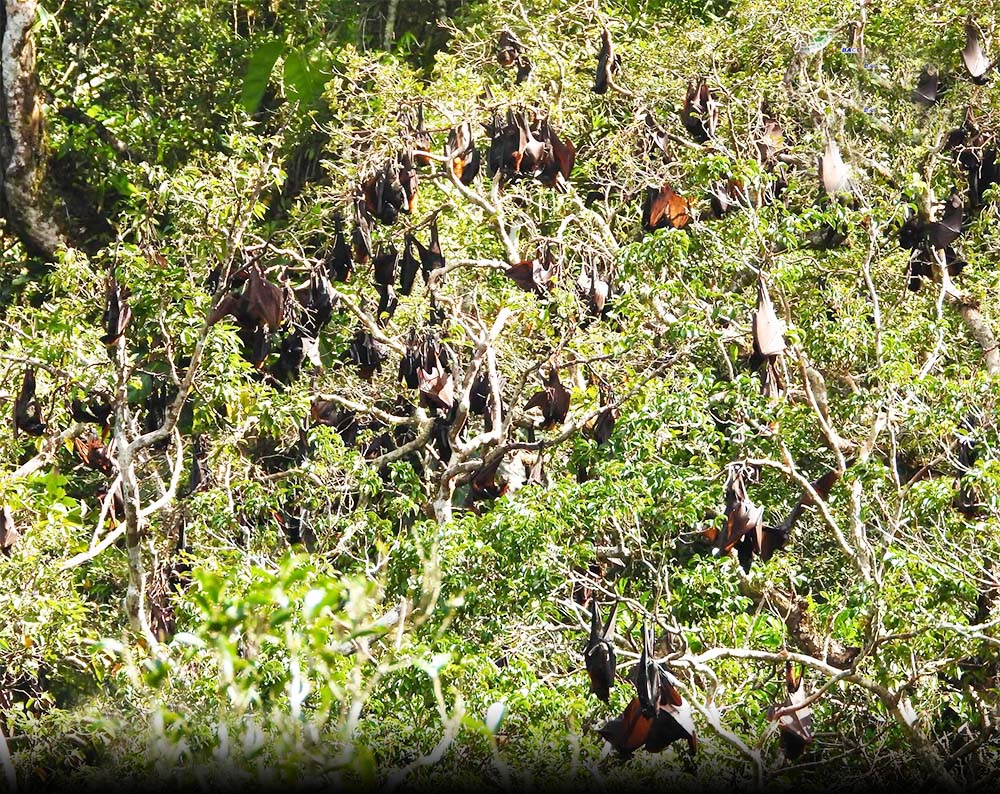
CITY OF SAN FERNANDO, Pampanga — More than 8,000 golden-crowned flying foxes (Acerodon jubatus), an endangered fruit bat species, have been recorded at a roosting site in Aurora Memorial National Park (AMNP), highlighting the importance of protecting the province’s wildlife and natural habitats.
The Department of Environment and Natural Resources (DENR), through its community office in Maria Aurora, Aurora, documented the bats during a monitoring activity at the protected area.
The golden-crowned flying fox is an endangered species known for its large size and distinctive golden-colored crown. As a fruit-eating bat, it plays an important role in forest ecosystems by dispersing seeds and helping maintain forest regeneration.
The observation highlights the park’s importance as a refuge for threatened wildlife and underscores the need to protect its forest habitats.
The monitoring marked the second time DENR Maria Aurora personnel had observed the roosting site, following their initial observation last year.
DENR Maria Aurora community head Marivic Santos emphasized the ecological importance of fruit bats, particularly their role in seed dispersal and natural forest regeneration, which help sustain healthy forests and preserve biodiversity in Central Luzon.
“Protecting the roosting sites and feeding habitats of this fruit bat species is essential to sustaining ecological functions and maintaining the health of Aurora’s vast forest ecosystems,” Santos said.
Despite their contribution to forest ecosystems, golden-crowned flying foxes face conservation threats, particularly hunting and disturbances in their roosting sites. The species is classified as Endangered on the International Union for Conservation of Nature (IUCN) Red List of Threatened Species.
DENR Regional Executive Director Ralph Pablo, meanwhile, underscored the importance of protecting the province’s remaining forest habitats to ensure the survival of threatened wildlife and maintain ecological balance.
“The intensified and regular monitoring activities of the DENR underscore the importance of preserving natural ecosystems to ensure the survival of native wildlife and maintain ecological balance for the betterment of our region’s biodiversity,” Pablo said.
He added that the large number of flying foxes recorded at the site highlights the need for sustained wildlife monitoring, habitat protection, and science-based conservation measures within AMNP.
Pablo also called on government agencies, volunteer groups, and local communities to support biodiversity conservation initiatives and help protect the region’s natural habitats.
“We continuously encourage all government agencies, volunteer groups, and communities to join us in our biodiversity conservation efforts. Let us work together to protect the rich biodiversity and natural habitats of Central Luzon through collective action and shared responsibility, ensuring the preservation of our natural heritage for future generations,” Pablo ended. (UnliNews Online)

