


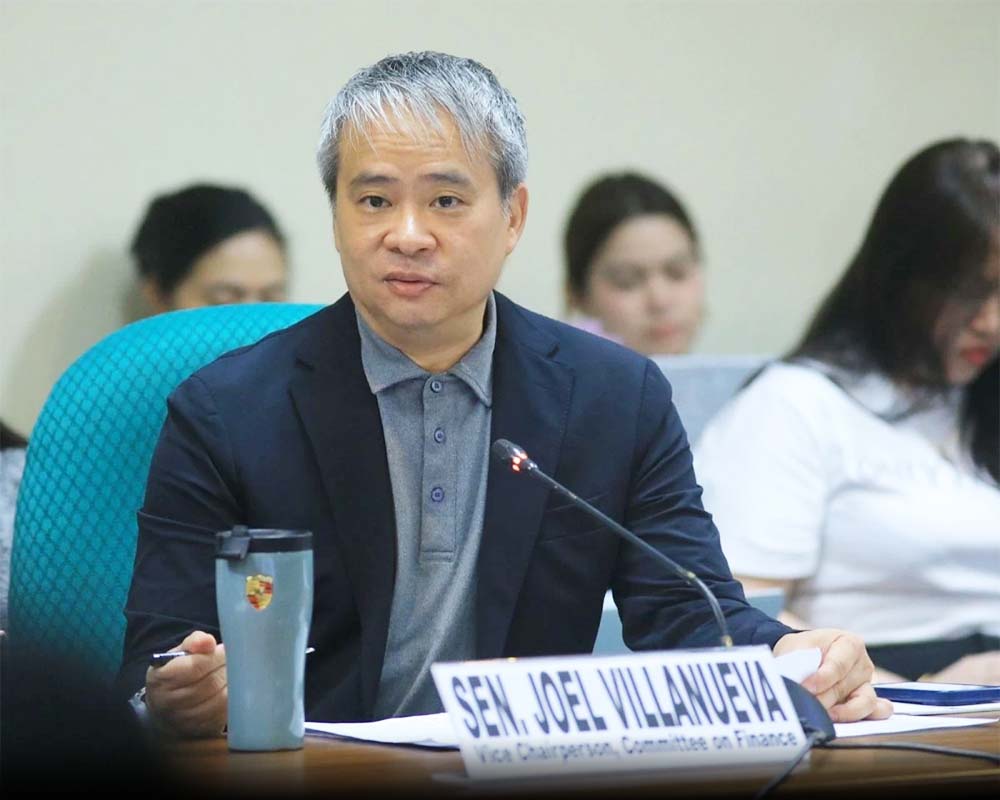
SENATOR Joel Villanueva has called on the Department of Health (DOH) and the Philippine Health Insurance Corporation (PhilHealth) to overhaul its stalled benefit package for autism spectrum disorder (ASD) care, after learning that the program has paid only 482 claims since its launch in 2017.
Villanueva raised the issue during a Senate budget briefing on the agencies’ proposed 2027 budgets, questioning whether the ?74.449-billion National Health Insurance Program subsidy included in the proposed budget is reaching Filipinos with ASD and other developmental disabilities.
“A promise on paper is not the same as help in hand. In eight years, this benefit has reached only 482 families,” Villanueva said. “We appreciate PhilHealth’s commitment today, and we don’t have to wait for a new law to start closing that gap.”
PhilHealth President and CEO Dr. Beverly Lorraine C. Ho confirmed that the benefit package has been in place since 2017 but disclosed that only 482 claims have been paid in eight years, largely because only five facilities nationwide are accredited to provide the service.
Villanueva also noted that the existing package covers up to 90 therapy sessions, while its assessment component is valued at only ?3,000 to ?5,000, an amount he said falls far short of the actual cost families incur to secure an ASD diagnosis.
The senator said Senate Bill No. 1822, or the National Autism Care, Support, and Inclusion Act, which was approved on third and final reading last March, introduced amendments that would expand PhilHealth coverage for persons with ASD.
Ho told the panel that PhilHealth plans to release an updated policy before the end of the year that will double both the package rate and the number of covered consultations, in line with a directive from the President’s recent State of the Nation Address.
She also said the agency is finalizing rules that would allow occupational and speech therapists to be accredited based on their practice rather than requiring them to operate from a fixed clinic. PhilHealth is likewise scaling up a screening and training module for barangay health workers and daycare staff developed with the Developmental Pediatrics Society.
Villanueva separately raised the shortage of occupational therapists (OTs), physical therapists (PTs), and speech-language pathologists with Health Secretary Edwin Mercado, noting that only a small share of the DOH’s planned health worker deployments for 2027 are allocated to these specialized fields.
Mercado said producing an OT or PT takes four to five years, while a significant share of graduates leave the country to practice abroad. He added that an expanded PhilHealth benefit package, coupled with higher professional fees, could help make local practice more viable for these specialists.
“A law on paper does not put a therapist in a clinic. If we don’t make it worthwhile for our own graduates to stay and practice here, families will keep waiting no matter how many laws we pass,” Villanueva said. “We’re ready to work with DOH, PhilHealth, and our schools to change that.”
Villanueva said his office remains ready to coordinate with the PhilHealth board and the DOH on interim measures while awaiting House action on its counterpart of the Senate-passed bill. (Manny D. Balbin)

