


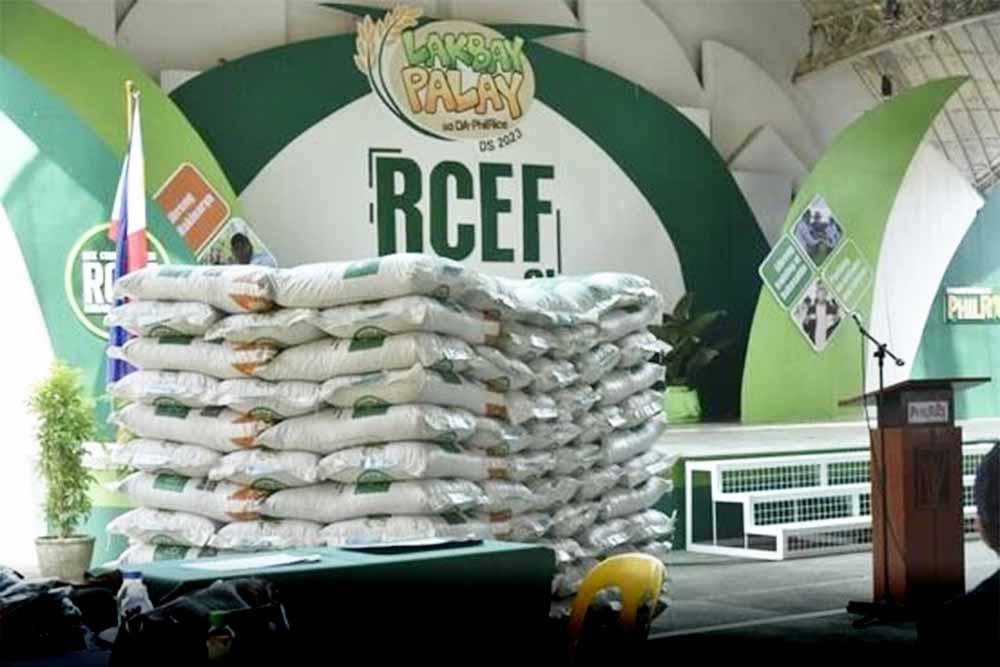
SCIENCE CITY OF MUÑOZ (PIA) — The Rice Competitiveness Enhancement Fund (RCEF) Seed Program has achieved an 85 percent accomplishment rate in its seed distribution across Central Luzon as of June 2026, empowering local rice farmers for the current wet season.
Data from the program showed that as of May 2026, around 65% of the region’s full seed allocation had already been successfully distributed to the target beneficiaries.
RCEF Regional Coordinator Jhoemar Dela Cruz reported that during the 2025 wet season, the program distributed 449,000 bags of certified inbred seeds to 131,000 farmers across Region III.
For the 2026 wet season, the program has scaled up its operations to reach more stakeholders.
“If we look at the data from the 2025 wet season, we distributed 449,000 bags of certified inbred seed to 131,000 farmers. For the 2026 wet season, we have maintained the same target, and we expect to distribute these to around 134,000 farmers across the entire Region III,” Dela Cruz said.
Farmers in the remote areas of Aurora, Pampanga, and Zambales expressed their gratitude for the initiative, noting that the free high-quality certified seeds offer better germination and improved crop performance compared to the seeds they previously utilized.
To ensure resilience and maximum productivity, Dela Cruz explained that the RCEF Seed Program selects certified inbred seed varieties based on their high-yielding capabilities and adaptability to various environmental and adverse climate conditions.
Among the high-yielding varieties distributed are NSIC Rc 222 and NSIC Rc 216, alongside the newly introduced NSIC Rc 680.
Farmers also received premium quality rice varieties including NSIC Rc 218, NSIC Rc 160, NSIC Rc 480, Rc 534, and the upcoming NSIC Rc 402.
Dela Cruz added that the program strategically provides specific seed varieties tailored for irrigated, rainfed, upland, and saline-prone areas to suit the exact farming conditions of the recipients.
Under Republic Act No. 12078, which amended Republic Act No. 11203 known as Rice Tariffication Law, qualified beneficiaries of the RCEF Seed Program must be registered in the Registry System for Basic Sectors in Agriculture (RSBSA), encoded in the Farmers and Fisherfolk Registry System, and must be residents of the areas covered by the program.
Membership in accredited farmers’ cooperatives, irrigators’ associations, or Department of Agriculture clusters is also highly encouraged.
To claim the free seeds, beneficiaries only need to present a valid identification card (ID).
Senior citizens and persons with disabilities may authorize a representative by submitting an authorization letter alongside the valid IDs of both the beneficiary and the representative.
Farmers who are not yet registered may visit their respective Municipal Agriculture Offices to accomplish the RSBSA registration form and submit necessary documents proving that they are actively engaged in farming.
Dela Cruz emphasized that utilizing certified inbred seeds can increase crop yield by up to 10% due to their high germination rate, varietal purity, resistance to pests and diseases, and improved grain quality, which eventually commands a better market value.
He urged farmers to maximize the benefits of the free inputs by pairing them with modern technologies and sound crop management practices to unlock higher yields and better income.
“Together with the use of appropriate technologies and proper farm management, every seed we plant today carries the hope of a more abundant harvest and more secure future for our families and communities,” Dela Cruz underscored.
The RCEF Seed Program directly supports the directive of President Ferdinand R. Marcos Jr. to strengthen the country’s food security.
This is achieved by increasing rice productivity, boosting farmers’ incomes, and ensuring a stable, sustainable supply of affordable rice through the provision of high-quality agricultural inputs and modern farming systems. (Camille N. Gavino)