


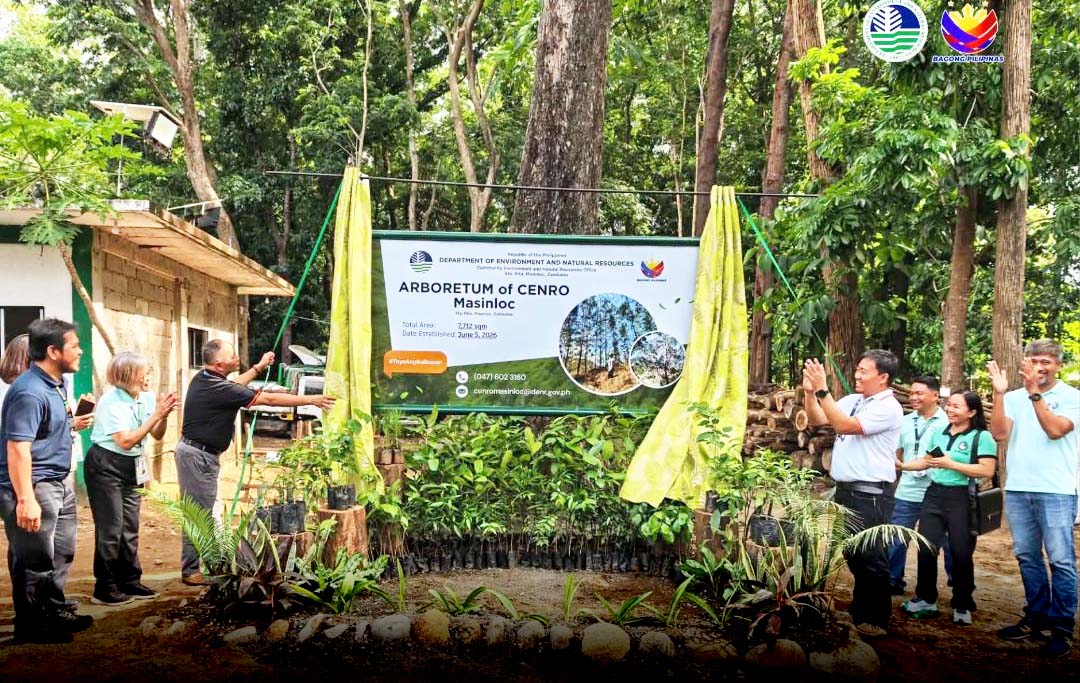
CITY OF SAN FERNANDO, Pampanga — Preservation of indigenous tree species in Masinloc, Zambales is getting a boost from the operation of the Community Environment and Natural Resources Office (CENRO) Masinloc Arboretum, a 7,712-square-meter facility of the Department of Environment and Natural Resources (DENR) that showcases native tree species and supports biodiversity conservation.
More than 300 native tree seedlings are growing within the arboretum, including Almaciga, Agoho, Bitaog, Palosapis, Molave, Dao, Kalantas, Narra, Ipil, Mindoro Pine, Ilang-Ilang, Lapnisan, Red Nato, Kalumpit, Arangen, Banaba, Toog, Tindalo, Tuai, Taluto, and White Lauan.
DENR Regional Executive Director Ralph Pablo stressed that the arboretum helps increase public appreciation of the country’s native trees and forest ecosystems.
“This arboretum is more than a living repository of native tree species. It is a living classroom where people can learn, appreciate, and connect with nature. Through its establishment, individuals will gain a deeper understanding of the importance of conserving biodiversity and protecting the environment for the benefit of all,” Pablo said.
The facility serves as a demonstration site and a venue for environmental education, giving students, researchers, visitors, and stakeholders the opportunity to learn about native tree species and their ecological importance.
According to CENRO Masinloc Chief Donaver Guevarra, the initiative supports the agency’s efforts to preserve native trees while promoting environmental stewardship among communities.
“The establishment of the CENRO Masinloc Arboretum reflects our commitment to conserving native tree species and strengthening environmental awareness among present and future generations. Through this initiative, we hope to inspire greater appreciation for our forests and encourage active participation in environmental conservation efforts,” Guevarra said.
Aside from serving as a repository of native species, the arboretum highlights the critical role of trees in climate change mitigation, watershed protection, and biodiversity conservation.